Practical Wisdom: The Fire of Belonging
There is a moment, just before the first of May, when the world seems to hold its breath. The apple tree is heavy with blossom. The air smells like something about to begin. And if you are paying attention, if you are the kind of person who notices the particular quality of silence that falls between one thing and the next, you can feel it: the membrane between what we call ordinary life and what the ancients called the Otherworld growing thin as spider silk.
The Celts knew this. They named it Beltane.
Falling on the first of May, Beltane marks the midpoint between the spring equinox and the summer solstice, the hinge point of the year when winter's long withdrawal finally completes itself and the full force of summer arrives. It is one of the four great fire festivals of the Celtic calendar, alongside Imbolc, Lughnasadh, and Samhain, and it was taken seriously in ways that most of us, living under artificial light and climate-controlled air, have largely forgotten how to take anything.
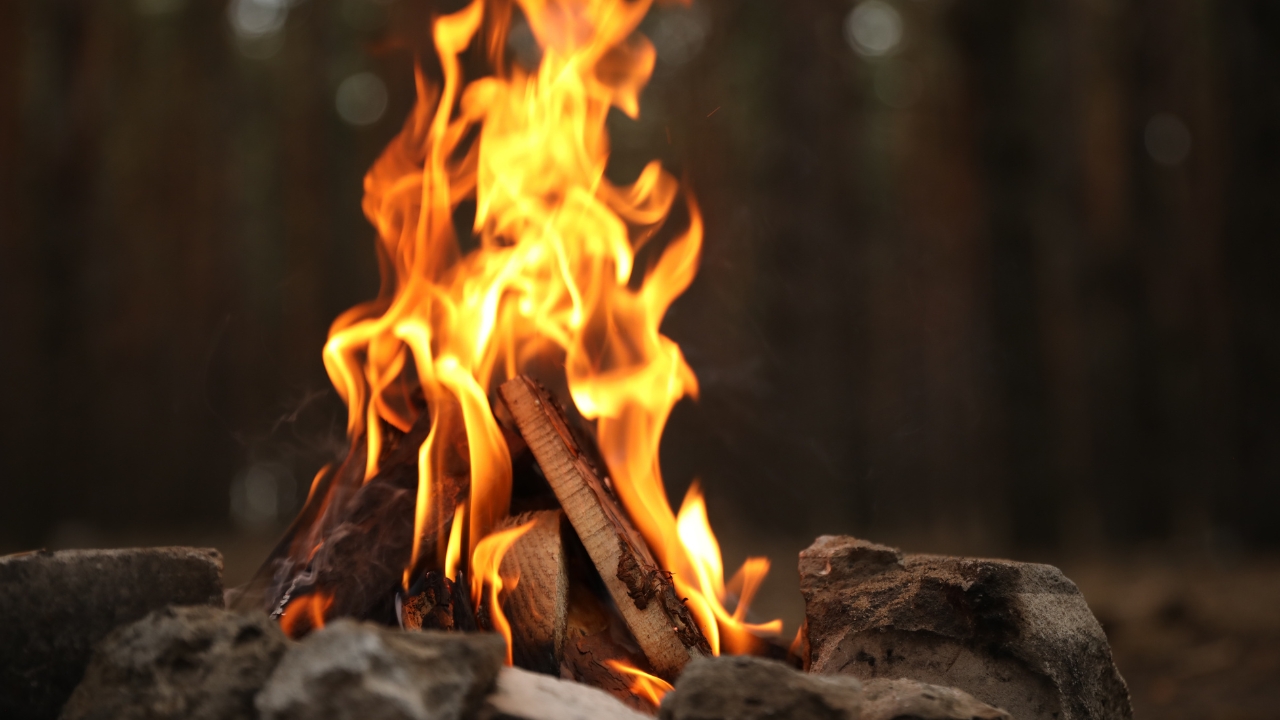
Bonfires were lit on hilltops. Entire communities came together. Cattle were driven between the flames, not out of superstition exactly, but out of a lived understanding that fire purifies, that smoke carries what we offer it upward, and that the threshold between one season and the next is a moment of real power if we choose to meet it consciously.
Every household hearth was extinguished for the night, and then relit from the communal Beltane fire, so that each family carried home a flame that had been shared. It was a radical act of belonging.
The Night the Veil Goes Thin
Most people know that Samhain, in late October, is the time when the veil between the worlds thins and the beloved dead draw near. What fewer people know is that Beltane holds the same quality, the same liminal charge, but with a different face.
Where Samhain turns toward the ancestors and the darkness, Beltane opens toward the living world of nature spirits, the fae, the wild intelligence that moves through forests and rivers and blooming things. The ancient Celts understood both May Day and the Celtic new year in November as what scholars now call liminal times: moments when the ordinary boundaries between human experience and the unseen world become permeable, when what is usually hidden becomes briefly visible, when what is usually distant draws close.
The word liminal comes from the Latin limen, meaning threshold. A doorway. The space between inside and outside, between what you were and what you are becoming. Beltane is a threshold in time itself and crossing it with awareness changes something in you.
In Celtic cosmology, the Otherworld was never imagined as distant. It was not above the clouds or beyond the horizon. It existed alongside this world, just past the edge of ordinary perception, accessible through the right places, the standing stones, the hollow hills, the mist over a lake at dawn, and through the right times. Beltane was one of those times. The Sidhe, the faery folk, were said to roam freely. Holy wells were visited and offerings made. The dew gathered on May morning was believed to carry healing and beauty, to mark a person as having touched something rare.
We might smile at that now. But consider what our ancestors understood that we are only beginning, through physics and psychology and the contemplative traditions, to articulate: that the world is not what it appears to be on its surface.
What We Are Really Talking About
I have spent more than three decades working with people in sacred and ceremonial contexts, and I’ve noticed something consistent across cultures, traditions, and continents: human beings need permission to feel connected. We need ritual. We need designated moments when the invisible becomes visible, when we can say out loud, in the company of others or even in the company of a lit candle and our own honest heart, that there is more to this life than what we can prove.
May Day, also known as Beltane, is one of those permissions.
The ancient bonfire was not about fire. It was about gathering. It was about the village coming to the hilltop and saying, collectively: we are here. We made it through another winter. We belong to this land and to each other. The fire was the visible form of something invisible, which is the human need to feel part of something larger than oneself.
That need has not changed. The cosmology may have shifted, and the hilltop fires may have gone out in most places, but the longing they answered is still in us. The longing to feel the world as alive and responsive. To feel ourselves as participants in something ancient and continuous, not just consumers of a moment. To feel, even briefly, that the worlds are connected, that what we carry in our hearts matters, and that we are not alone here.
How to Meet It
You needn’t believe in faeries to receive what Beltane is offering. You need only be willing to step out of the ordinary long enough to feel something.
Go outside before the sun is fully up on May morning. Stand in the damp grass. Let the light come to you slowly. Notice the apple blossoms if they’re out, the way the world looks when it’s just beginning to remember itself after winter. This isn’t a metaphor. This is an actual practice of presence that our ancestors considered sacred.
Light a candle after dark on April 30th, the eve of Beltane. Let it represent what you’re carrying from winter, what you are ready to let transform in the fire of a new season. Sit with it. Let yourself feel the weight and the hope of the threshold you’re crossing.
Make an offering. It doesn’t have to be elaborate. A handful of flowers left at the base of a tree. A bowl of water set out to catch the morning light. A few words spoken honestly into the air, something you intend, something you’re releasing, something you’re grateful for. The act of offering is the act of relationship, with the world, with the unseen, with the part of yourself that knows there is more going on here than the to-do list suggests.
And if you can, gather with people. Beltane was never meant to be solitary. The collective fire, the shared intention, the laughter and the ritual and the meal afterward: these are the whole point. We are wired for belonging in the same way the apple tree is wired to bloom. It’s not optional. It is what we are.
A Final Word on the Thinning
What moves me most about Beltane, after all these years of working with it, is the quality of the veil when it thins. The boundary between the worlds becomes more transparent, more willing to be looked through. And what we see on the other side, if we look honestly, is not something foreign or frightening. It’s the fullness of life itself, more alive, more connected, more saturated with meaning than we usually allow ourselves to experience.
May the fires of this Beltane kindle something real in you. May the threshold carry you forward into the light half of the year with your eyes open and your heart willing. And may you find, standing in the dew of May morning, that you have never actually been separate from the living world that holds you.
Blessed Beltane.

Read the Amazon Bestseller
Sacred Menopause is more than a book. It is a companion for the holy initiation of midlife, a guide that helps you move through confusion to clarity and confidence.
Within these pages, you’ll find stories, journal prompts, ceremonies, wisdom, and practices that honor your body, your soul, your work, and your relationships. This stage of life is the opening of a doorway into your deepest power and most luminous life.
30 Days of Simple Ceremonies
Sacred living often begins with small, meaningful gestures
This complimentary offering invites you to weave reflection and intention into everyday moments, reminding you that transformation rarely requires grandeur.